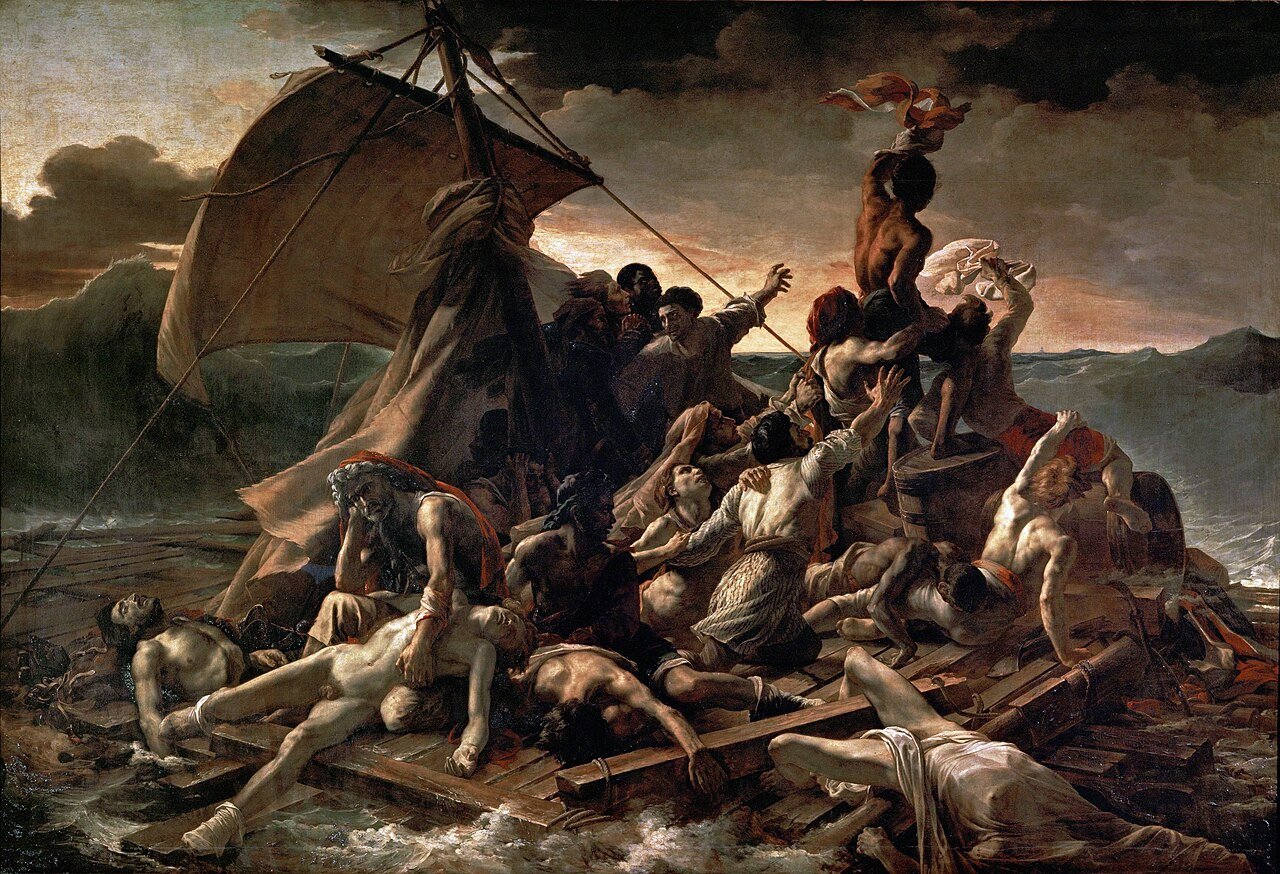
I’ve always found something superficial about art.
As a designer, there is a blurry line between art and design. For some people, both terms describe almost the same thing. I like to distinguish between them this way: art is primarily expression, while design is primarily intention. An artist creates to explore an emotion, question, or idea. A designer’s main driver is usually a problem.
A chair is designed to be sat on. A poster is designed to communicate something. In my work, whether I am designing a logo or a UI for a website or app, the goal is usually to solve a problem. Maybe it is brand awareness, better communication, or more sales.
The relationship between design and art gets more interesting the closer you get to the overlap. A beautifully designed chair can be exhibited as art. So can a poster. Architecture, fashion, filmmaking, and typography constantly move between the two.
Art, for me, is also a fundamental source of inspiration. I am constantly observing composition, rhythm, tension, symbolism, color, and atmosphere in film, architecture, photography, music, and other forms of art, then translating some of that into something functional.
Still, I can’t help noticing the people I see in museums and art exhibitions. It almost feels like there is a minimum economic level required for entry. I see people whose basic needs are covered. Me included.
There seems to be a certain level of comfort at which art becomes part of everyday life. You start discussing films beyond whether they were good or bad, visiting exhibitions, caring about architecture, photography, music, or what a painting is trying to say.
During wars and disasters, when people are being killed, displaced, starved, or living under occupation, you see others making art about what is happening: paintings, songs, films, poems, posters.
I feel that temptation too. When something happens around a cause I support, part of me wants to make something about it. But I often stop myself. There is something deeply uncomfortable about responding to someone else’s suffering with an artwork.
I imagine someone living under occupation losing their home, their family, or their life in the worst possible way, and then being told that somewhere far away someone made a painting or a song for them. The distance between the scale of their suffering and the scale of that response feels insulting.
Sometimes I see this kind of expression as helplessness. Sometimes as a way for people to feel that they contributed somehow, to feel better about themselves, even when little to nothing has actually changed.
There is something uncomfortable about a privileged person turning someone else’s suffering into an aesthetically beautiful object, displaying it in a gallery or printing it on a T-shirt. It can create the feeling that they have somehow done something, or that making the work somehow makes them part of the cause.
Art can become a substitute for action.
It can also turn suffering into social currency.
Is making art about someone else’s suffering an act of solidarity, or sometimes just a privileged person’s way of feeling useful?
A child sitting among the ruins of their home can still draw or sing. that seems willingness to continue living. A refusal to allow war to reduce a person entirely to survival.
A photographer can risk his life to show the world what is happening. A film can preserve something that would otherwise disappear. A story can take a political reality and turn it into something that can be understood beyond its time and place.
What about someone who genuinely cannot stop a war but can make a film about it?
Art can be a historical documentation tool. It can be a tool of expression under political oppression. Photography has changed public opinion. Songs have become symbols of movements, it can carry political ideas further than an essay ever could. Films can preserve stories that governments would prefer forgotten.
Novels written under oppression can disguise political arguments inside fictional worlds and allow them to survive beyond the event that produced them. They can preserve experiences that might otherwise have been forgotten. Even a story about animals can describe the political situation in a way that remains understandable long after the exact political moment has passed.
People living through war or oppression may need others to speak, document, and show the world what is happening through photography, film, music, writing, and painting.
They also need people to help stop the war, feed them, support them materially, and apply political pressure. Those things are not the same.
The problem comes when we romanticize what art can actually do.
A painting is not aid.
A song is not political pressure.
A poem does not stop a bomb.
That does not make them meaningless. It means their role has limits.
Art can document suffering without ending it.
It can come from privilege and still say something true.
Maybe art is a privilege. That does not make the enjoyment of it wrong.
Maybe art can be superficial without being meaningless.
Maybe the mistake is treating it as enough.
And maybe I’m asking too much from art.